Partnering with Data Science to build ML models that analyze customer photos in real-time, reducing manual review time and accelerating appointments
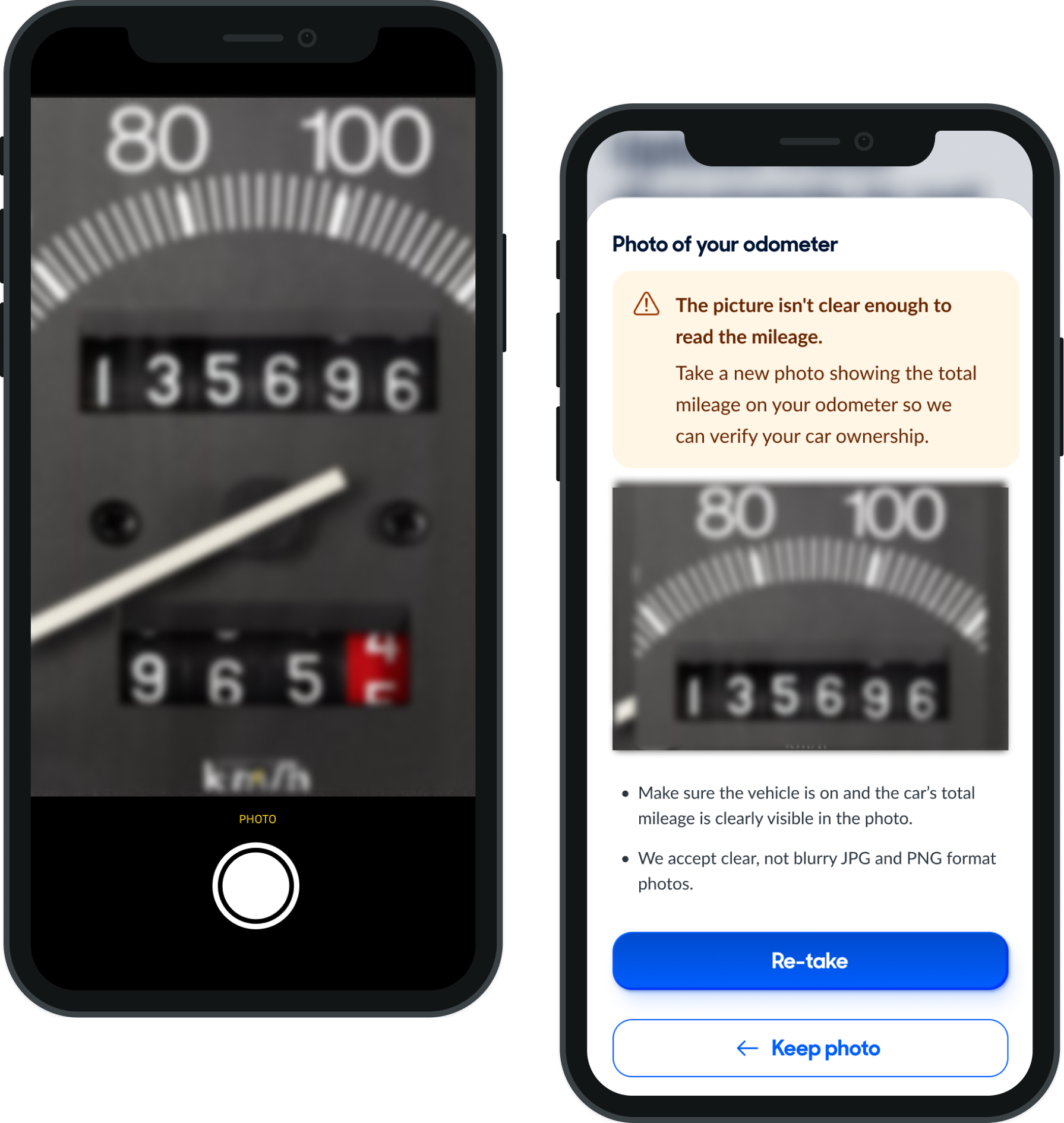
Customers upload odometer photos during the appraisal process, but associates had to manually review every single image—creating a 4-6 hour bottleneck before appointments could be scheduled
Associates were spending significant time reviewing odometer photos to catch the most common errors: blurry images, incorrect readings (trip vs actual mileage), and wrong image types. This created wait time for customers and slowed down the entire appointment flow.
When document validation took hours, customers would lose momentum and were less likely to complete their appointments. The longer the wait, the lower the conversion.
We ran an opportunity solution workshop to identify the highest-impact interventions to reduce document review time and improve conversion
If we could automate validation for the most common rejection reasons (blurry images, incorrect odometer readings, wrong image type), we could:
We partnered with the Data Science team to design our own machine learning models that could analyze customer images as they upload, catching errors in real-time and saving both customer and associate time.
Used Miro to collaborate with Product and Data Science, identifying key questions about the ML process and mapping the validation flow
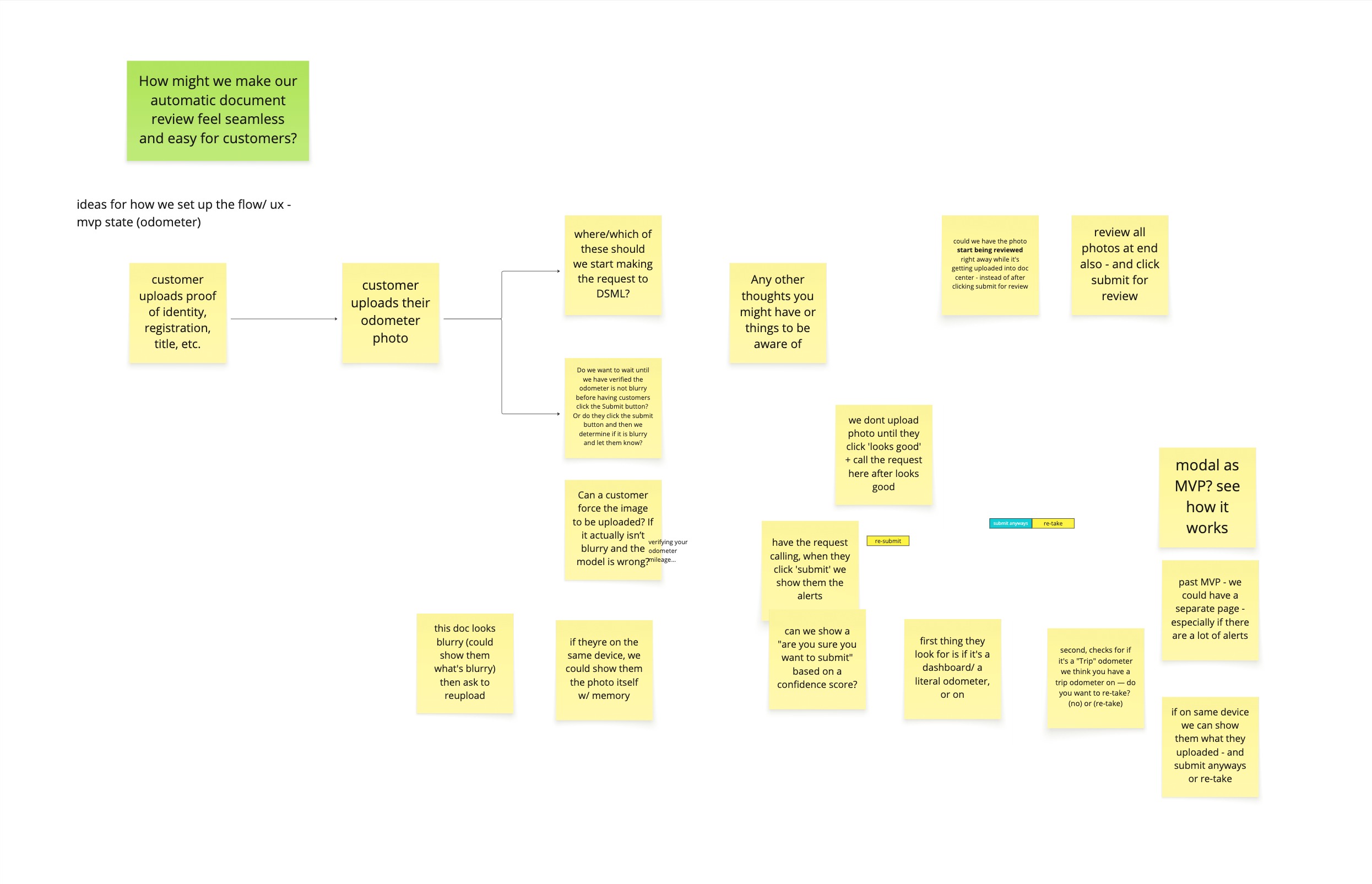
Sticky notes exploring: How does the model work? What's the accuracy threshold? When do we route to associates?
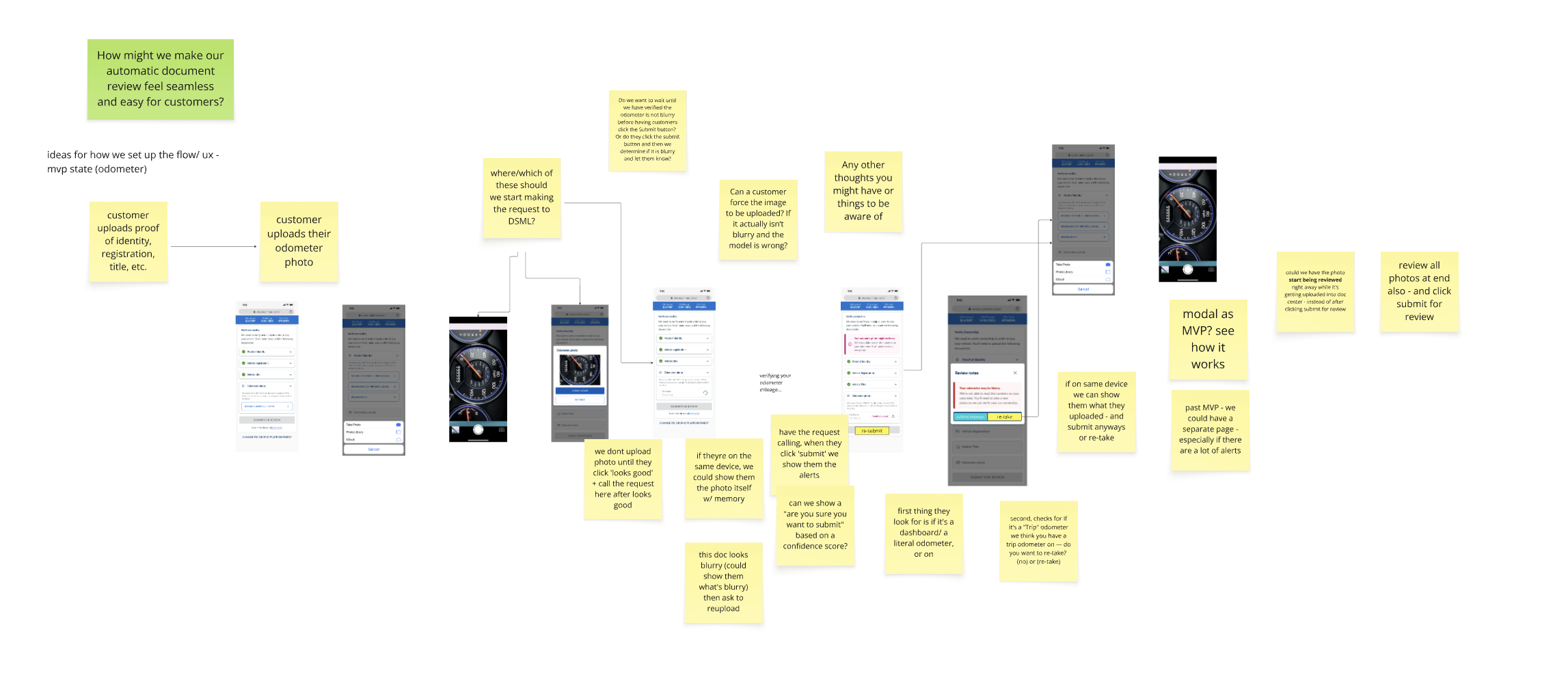
Customer uploads photo → ML analyzes → Confidence check → Auto-approve or route to associate
Designed the mobile experience for customers to upload odometer photos, with real-time feedback when ML validation is complete
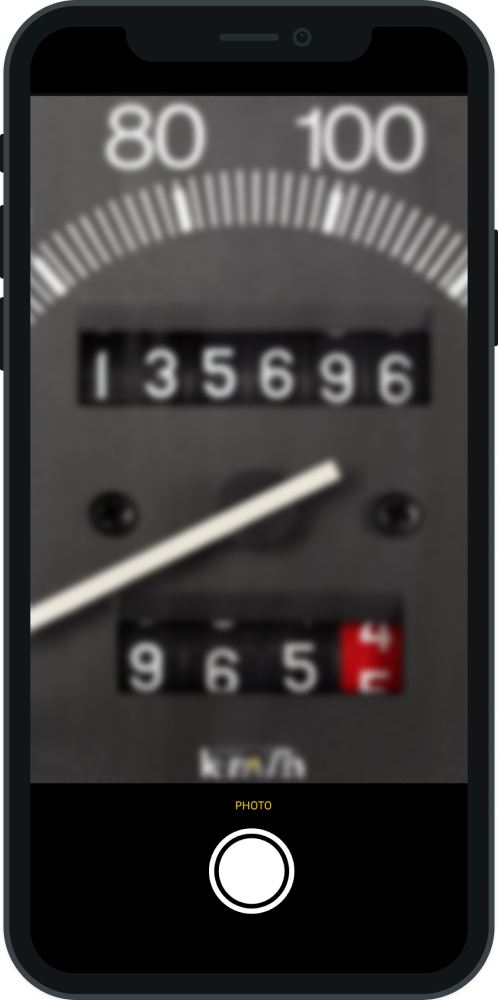
Upload Screen
Odometer photo prompt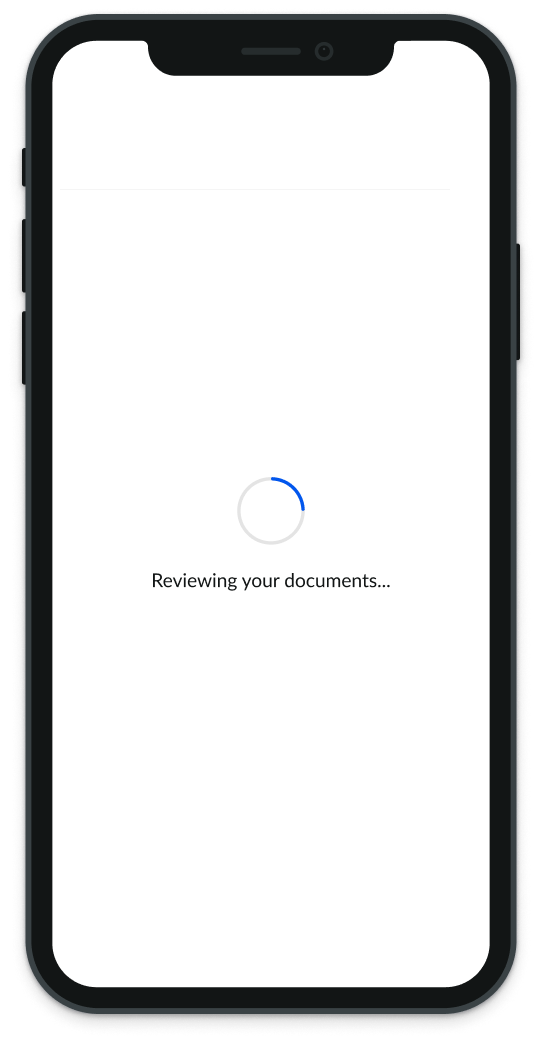
Processing State
ML analyzing image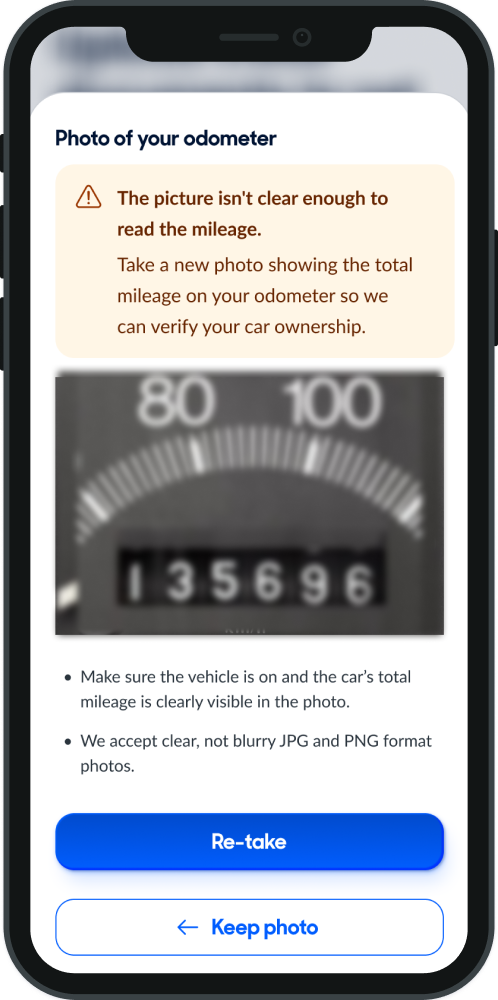
Validated
Ready for appointmentPartnered with Data Science to build custom machine learning models that analyze customer photos in real-time, catching errors at upload and accelerating the entire flow
ML model analyzes odometer photos as customers upload them, extracting mileage readings in 3-6 seconds—dramatically faster than the 4-6 hour manual review queue.
Computer VisionModel identifies the three most common rejection reasons: blurry images, incorrect readings (like trip vs actual mileage), and wrong image types—catching issues before associates even see them.
Smart ValidationOnly flags uncertain cases for associate review. When the model is confident (85%+ accuracy), documents are auto-approved. Associates focus their time on edge cases that actually need human judgment.
Smart RoutingClear correlation between faster document review and improved business outcomes
Building trust with the DS team early meant we could design the ML model collaboratively, not just hand off requirements. This led to better accuracy and faster iteration.
Focusing on the top 3 rejection reasons (blurry, incorrect reading, wrong type) meant we could validate the model quickly with measurable impact.
Only auto-approving when the model was confident (85%+) meant associates still reviewed edge cases, maintaining quality while dramatically reducing overall review time.
We focused heavily on the associate side (manual review pain) but could have done more research on customer expectations around upload feedback timing.
We tested extensively in staging but could have de-risked the launch with a beta group of customers before full production rollout.
Associates wanted to understand why the model flagged certain images. Building in explainability from the start would have increased trust in the system.